Most Expensive Pokemon Cards
Last updated: February 2026
| # | Card | Set | Market Price | PSA 10 | 30-Day Trend |
|---|---|---|---|---|---|
| 1 | Gyarados Star (Delta Species) | Holon Phantoms | $2,000 | $98,888 | +0.0% |
| 2 | Charizard Star (Delta Species) | Dragon Frontiers | $599.00 | $58,723 | +0.0% |
| 3 | Mew Star (Delta Species) | Dragon Frontiers | $1,700 | $57,500 | +0.0% |
| 4 | Poncho-wearing Pikachu - 230/XY-P | XY Promos | $3,599 | $9,650 | — |
| 5 | Poncho-wearing Pikachu - 230/XY-P (Japanese) | XY-P: XY Promos | $4,000 | $11,000 | +0.0% |
| 6 | Latios Star | Deoxys | $1,141 | $51,100 | — |
| 7 | Pikachu (1) | WoTC Promo | $27.64 | $750.00 | +0.0% |
| 8 | Pikachu Star | Holon Phantoms | $3,200 | $50,000 | +0.0% |
| 9 | Lugia | Aquapolis | $2,500 | $41,500 | +0.0% |
| 10 | Charizard | Deck Exclusives | $180.64 | $3,800 | +0.0% |
| 11 | Latias Star | Deoxys | N/A | $37,500 | — |
| 12 | Gengar (H9) | Skyridge | $7,386 | $34,905 | — |
| 13 | Charizard | Legendary Collection | $500.00 | $34,100 | +0.0% |
| 14 | Charizard (Japanese) | Mysterious Mountains | N/A | $24,000 | — |
| 15 | Rayquaza Star | Deoxys | $2,501 | $9,898 | +0.0% |
| 16 | Poncho-wearing Pikachu - 207/XY-P | XY Promos | $7,211 | $27,000 | — |
| 17 | Dark Dragonite | Legendary Collection | $509.99 | $26,000 | +0.0% |
| 18 | Vaporeon Star | Power Keepers | $457.00 | $1,075 | +0.0% |
| 19 | Charizard G | Supreme Victors | $94.24 | $24,950 | +0.0% |
| 20 | Mewtwo Star | Holon Phantoms | $2,002 | $24,500 | +0.0% |
1. Gyarados Star (Delta Species) (Holon Phantoms)
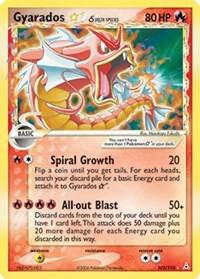
Gyarados Star (Delta Species)
Holon Phantoms · 102/110 · Ultra Rare
Market Price
$2,000
Low/High
$2,000 - $2,000
PSA 10
$98,888
30-Day Trend
+0.0%
2. Charizard Star (Delta Species) (Dragon Frontiers)
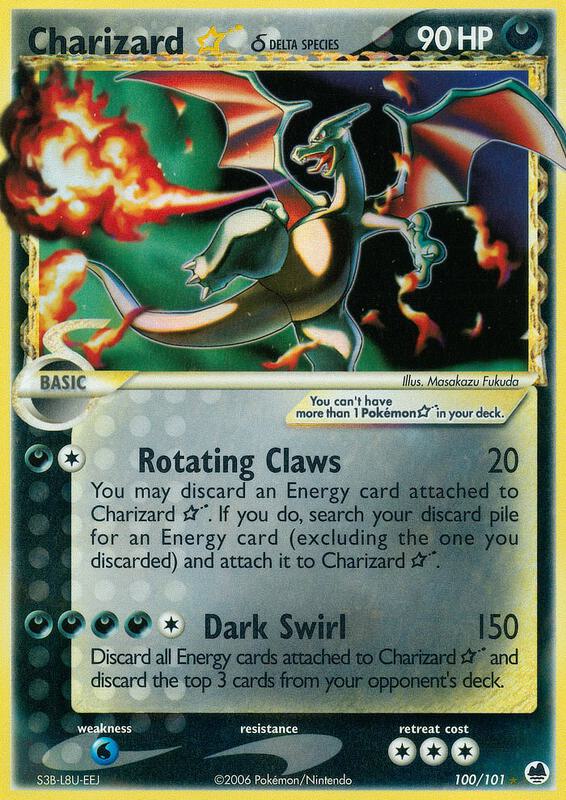
Charizard Star (Delta Species)
Dragon Frontiers · 100/101 · Ultra Rare
Market Price
$599.00
Low/High
$599.00 - $599.00
PSA 10
$58,723
30-Day Trend
+0.0%
3. Mew Star (Delta Species) (Dragon Frontiers)
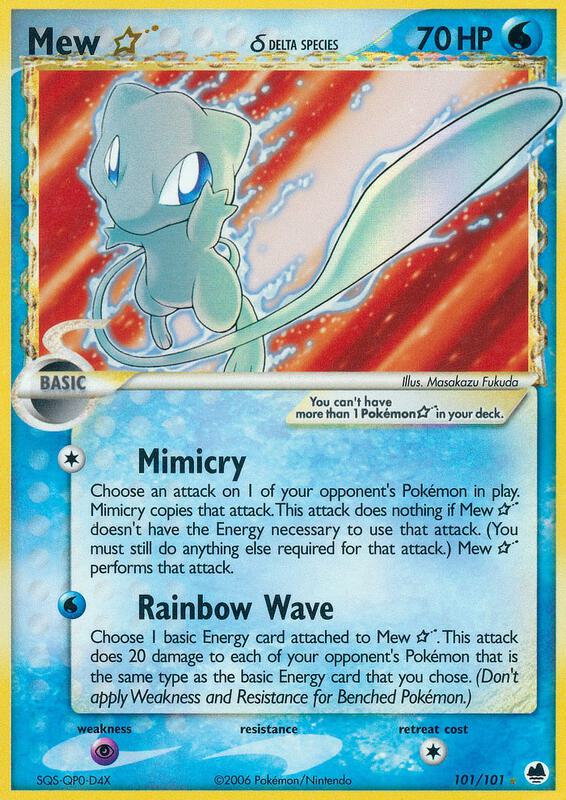
Mew Star (Delta Species)
Dragon Frontiers · 101/101 · Ultra Rare
Market Price
$1,700
Low/High
$1,700 - $1,700
PSA 10
$57,500
30-Day Trend
+0.0%
4. Poncho-wearing Pikachu - 230/XY-P (XY Promos)
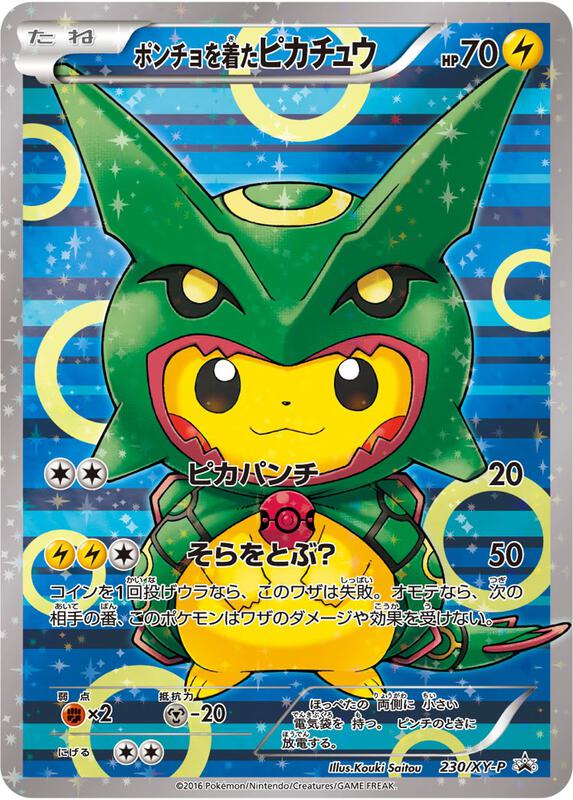
Poncho-wearing Pikachu - 230/XY-P
XY Promos · 230 · Promo
Market Price
$3,599
Low/High
$3,599 - $3,599
PSA 10
$9,650
30-Day Trend
—
5. Poncho-wearing Pikachu - 230/XY-P (Japanese) (XY-P: XY Promos)
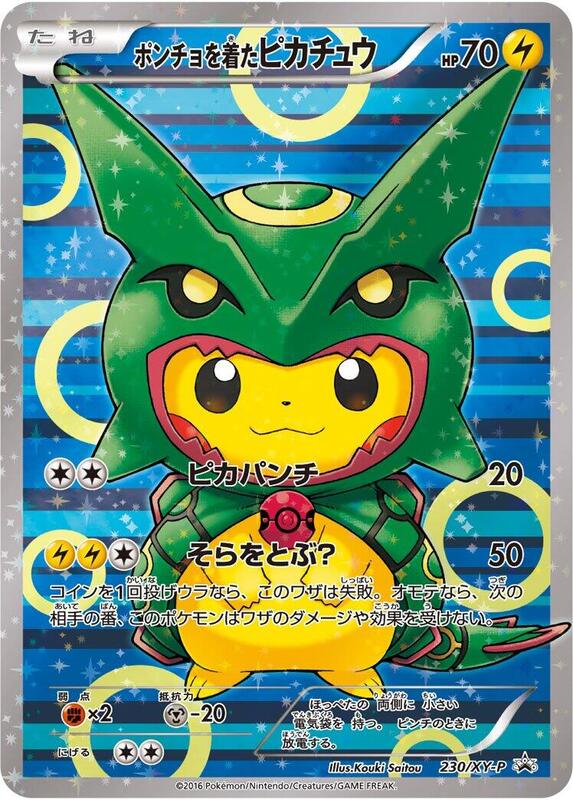
Poncho-wearing Pikachu - 230/XY-P (Japanese)
XY-P: XY Promos · 230/XY-P · Common
Market Price
$4,000
Low/High
$4,000 - $4,000
PSA 10
$11,000
30-Day Trend
+0.0%
6. Latios Star (Deoxys)
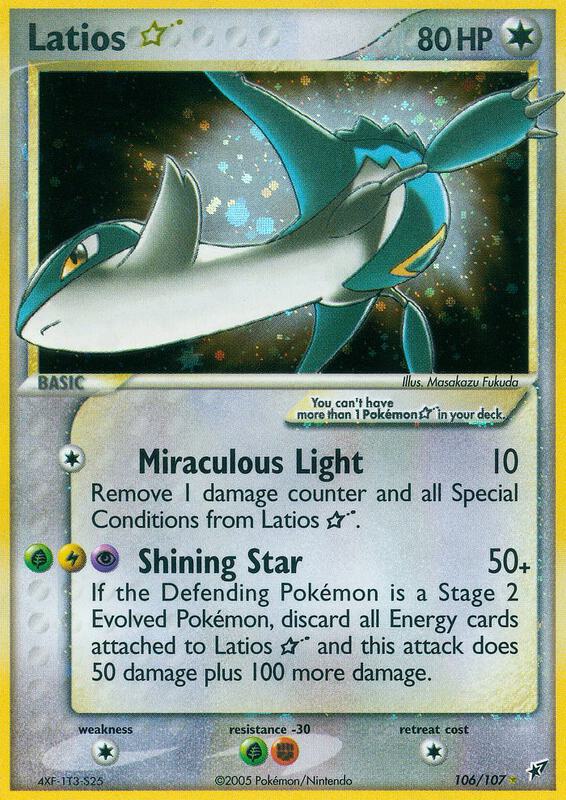
Latios Star
Deoxys · 106/107 · Ultra Rare
Market Price
$1,141
Low/High
$1,141 - $1,141
PSA 10
$51,100
30-Day Trend
—
7. Pikachu (1) (WoTC Promo)

Pikachu (1)
WoTC Promo · 01/53 · Promo
Market Price
$27.64
Low/High
$25.76 - $38.00
PSA 10
$750.00
30-Day Trend
+0.0%
8. Pikachu Star (Holon Phantoms)
Pikachu Star
Holon Phantoms · 104/110 · Ultra Rare
Market Price
$3,200
Low/High
$3,200 - $3,200
PSA 10
$50,000
30-Day Trend
+0.0%
9. Lugia (Aquapolis)
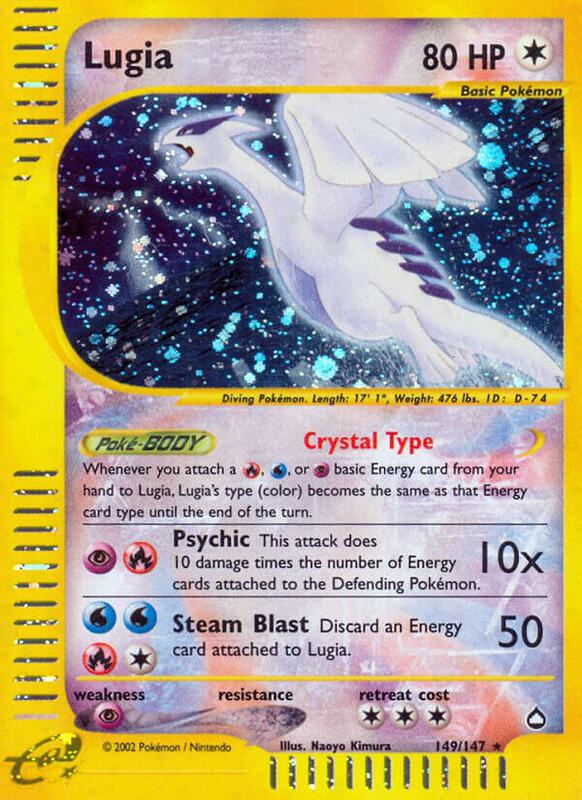
Lugia
Aquapolis · 149/147 · Secret Rare
Market Price
$2,500
Low/High
$2,500 - $2,500
PSA 10
$41,500
30-Day Trend
+0.0%
10. Charizard (Deck Exclusives)
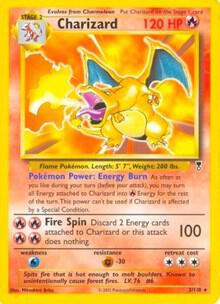
Charizard
Deck Exclusives · 003/110 · Rare
Market Price
$180.64
Low/High
$177.60 - $177.60
PSA 10
$3,800
30-Day Trend
+0.0%
Top 10 Highest Pokemon Card Sale Prices
The biggest Pokemon card sale prices read like auction-house headlines. These results show exactly how far the market will go for a top specimen. Every card here sold past $60,000 at public auction, and the number one figure sits in fine-art territory. Here are the top 10 highest-priced Pokemon cards by confirmed public sale:
- 1. Pikachu Illustrator (PSA 10): $5,275,000: This July 2023 result is the single highest price ever paid for a Pokemon card. Only 20-39 copies went out to winners of the 1998 CoroCoro Comic illustration contests, so a PSA 10 is one of the rarest slabs on earth and the sale blew past every prior record. The card reads "Illustrator" instead of "Trainer" and carries pen-and-ink Pikachu art by Atsuko Nishida.
- 2. Pikachu Illustrator (CGC 9.5): $4,476,000: A second Illustrator sale, in 2022, confirmed the price was no one-off. Even a notch lower in grade it still cleared millions. YouTuber Logan Paul bought this copy and wore it as a pendant, dragging mainstream eyes onto the hobby. The two Illustrator sales together near $10 million, locking this card in as the grail of all trading cards.
- 3. 1st Edition Base Set Charizard Holo (PSA 10): $420,000: The Base Set Charizard is the most recognized card the game has printed. A PSA 10 1st Edition copy sold for $420,000 in March 2022. Only around 120 copies have hit PSA 10 from the 1st Edition run, and that number barely moves. It is the price benchmark every other card gets measured against.
- 4. Blastoise Presentation Galaxy Star Holo: $360,000: A one-of-a-kind 1998 test print made before Base Set was finalized, carrying a Galaxy Star holo pattern that never reached retail. Wizards of the Coast produced it to pitch the game to North American retailers, making it a literal prototype of the world's biggest card game.
- 5. 1st Edition Base Set Charizard Holo (BGS 10 Pristine): $399,750: A BGS Pristine 10 carries even tighter standards than PSA 10, demanding perfect 10 sub-grades across centering, corners, edges, and surface. This January 2021 sale showed the premium a flawless BGS grade pulls. Only a handful of 1st Edition Charizards have ever reached it.
- 6. Kangaskhan Family Event Trophy Holo: $150,000: Handed out at the 1998 Parent/Child Mega Battle in Japan, this trophy is brutally scarce, with fewer than a dozen copies thought to exist. The parent-child team format makes it a slice of early TCG history.
- 7. 1st Edition Neo Genesis Lugia Holo (PSA 10): $144,300: Lugia's Neo Genesis art (2000) has made it a long-running favorite. 1st Edition PSA 10 copies are scarce thanks to the era's poor print quality: surface scratches, print lines, and rough cuts straight from the factory. A clean copy is a genuine find.
- 8. No. 1 Trainer Super Secret Battle (PSA 10): $90,000: This holo promo went to winners of Japan's regional tournaments in 1999. The card itself reads "No. 1 Trainer," among the most elite prizes in the game. Only seven were handed out across the original events, and a PSA 10 is nearly unfindable given the age and handling.
- 9. Gold Star Umbreon (PSA 10): $70,000: From 2005's POP Series 5, this is one of the scarcest cards of the ex era. Gold Star cards show the Pokemon spilling past the frame, and PSA 10 copies are extremely thin on the ground. Umbreon's lasting popularity keeps demand high, especially since the Evolving Skies Umbreon VMAX reignited interest.
- 10. Tropical Mega Battle Tropical Wind (PSA 10): $65,100: Given to entrants at the 2001 Tropical Mega Battle in Hawaii, with only about 12 English copies in existence. The invitational drew top junior players worldwide, making this one of the rarest English-language promos ever made.
These figures reflect peak confirmed public sales. Current prices may sit a bit below or above depending on recent auction activity and market mood, and private sales (which go unreported) may have topped some of these. To pull the current price on any of these or any card in your stack, head to our price checker.
Vintage Pokemon Card Prices (1999-2003)
Vintage cards: roughly the 1999-2003 Wizards of the Coast (WOTC) era: consistently return some of the highest price checks in the hobby. Nostalgia, limited print runs, and decades of attrition (cards damaged, lost, or tossed) have made mint vintage copies scarce. The WOTC era covers Base Set, Jungle, Fossil, Team Rocket, Gym Heroes, Gym Challenge, Neo Genesis, Neo Discovery, Neo Revelation, Neo Destiny, Legendary Collection, Expedition, Aquapolis, and Skyridge.
Here are the vintage cards collectors chase, priced across grades so you can read where your own copies land:
- Base Set Charizard Holo (1st Edition): PSA 10: $300,000+ | PSA 9: $15,000-$25,000 | PSA 8: $5,000-$8,000 | Raw NM: $2,500-$5,000. The Base Set Charizard needs no setup. The 1st Edition stamp on the left of the frame is what splits this price so far above the Unlimited copy.
- Base Set Charizard Holo (Unlimited): PSA 10: $5,000-$7,000 | PSA 9: $800-$1,200 | PSA 8: $400-$600 | Raw NM: $300-$500. Even the Unlimited print prices high in top condition. Millions of kids owned it, but most got played, traded, and dinged, so a true gem mint copy is harder to find than people expect.
- Base Set Blastoise Holo (1st Edition): PSA 10: $30,000-$40,000 | PSA 9: $3,500-$5,000 | Raw NM: $800-$1,500. The second starter checks strong, especially in 1st Edition. Blastoise has always trailed Charizard, but its PSA 10 population is actually lower, which arguably leaves it underpriced.
- Base Set Venusaur Holo (1st Edition): PSA 10: $15,000-$20,000 | PSA 9: $2,000-$3,500 | Raw NM: $600-$1,000. Often overlooked next to Charizard, 1st Edition Venusaur in PSA 10 is genuinely rare. Historically the cheapest of the trio, though the gap has been closing as collectors chase the full set.
- Shadowless Base Set Charizard Holo: PSA 10: $25,000-$50,000 | PSA 9: $5,000-$8,000 | Raw NM: $1,500-$2,500. Shadowless cards printed between 1st Edition and Unlimited, marked by no drop shadow on the right of the art frame. Many collectors see Shadowless as the sweet spot between rarity and price.
- Neo Genesis Lugia Holo (1st Edition): PSA 10: $80,000-$145,000 | PSA 9: $5,000-$10,000 | Raw NM: $500-$1,000. Lugia is a beloved Legendary and the Neo Genesis art is stunning. Poor era print quality makes PSA 10 copies extraordinarily scarce: the 1st Edition Lugia PSA 10 population is in single digits, which drives the price.
- Shining Charizard (Neo Destiny, 1st Edition): PSA 10: $25,000-$35,000 | PSA 9: $3,000-$5,000 | Raw NM: $800-$1,500. The Shining cards show full-body art of a recolored Pokemon: Shining Charizard is a black-and-crimson stunner. It is the crown card of Neo Destiny and one of the most striking vintage prints ever.
- Skyridge Charizard Holo (H9): PSA 10: $15,000-$25,000 | PSA 9: $4,000-$7,000 | Raw NM: $1,000-$2,000. Skyridge was the final WOTC set with a tiny print run. Its Crystal and Holo cards are among the rarest WOTC cards, and the Charizard is the set's chase.
- Dark Charizard Holo (Team Rocket, 1st Edition): PSA 10: $10,000-$15,000 | PSA 9: $1,500-$2,500 | Raw NM: $200-$400. Team Rocket's Dark Charizard is a long-time fan pick, and 1st Edition PSA 10 copies are scarce. The darker art and "Dark" naming give it a distinct pull.
- Base Set Alakazam Holo (1st Edition): PSA 10: $12,000-$18,000 | PSA 9: $2,000-$3,000 | Raw NM: $300-$600. One of the originals and a must-have for serious Base Set collectors, with instantly recognizable spoon-bending art.
- Crystal Charizard (Skyridge, Reverse Holo): PSA 10: $30,000-$60,000 | PSA 9: $8,000-$15,000 | Raw NM: $2,000-$4,000. The Crystal cards from Skyridge and Aquapolis are among the most chased vintage prints. Crystal Charizard carries a holo pattern over the whole face and is very hard to find in high grade.
The vintage market pays for patience and condition above all. A 1st Edition Base Set card in played shape might price at $20, while the same card in PSA 10 checks at tens of thousands. The condition multiplier here is steeper than any other era because mint supply only shrinks. If you think you have vintage cards in good shape, price-check them now with our price checker before you decide on grading.
Modern Pokemon Card Prices (2020-2026)
Modern cards rewrote the price ceiling. When the hobby blew up in 2020-2021, sets like Evolving Skies, Brilliant Stars, and Scarlet & Violet 151 proved brand-new cards could price against vintage. The modern era brought new chase types: Alternate Art, Special Art Rare (SAR), Special Illustration Rare (SIR), and Illustration Rare (IR), all carrying full-bleed, magazine-grade art. Here are the modern cards that price highest and that you can still pull today:
- Umbreon VMAX Alt Art (Evolving Skies #215): PSA 10: $3,500-$5,000 | Raw NM: $400-$600. The chase card of the modern era. The moonlit rooftop art became an instant icon and demand has never let up. Collectors call it "Moonbreon VMAX," and its price has held through corrections, proving real staying power.
- Moonbreon (Umbreon V Alt Art, Evolving Skies #188): PSA 10: $1,500-$2,500 | Raw NM: $180-$280. The companion Alt Art to the VMAX, Umbreon under moonlight against a skyline. Together with the VMAX it is the most-wanted pair in modern collecting, often framed side by side.
- Charizard ex Special Art Rare (Scarlet & Violet 151 #199): PSA 10: $600-$900 | Raw NM: $250-$400. 151 revived the original 151 with new art, and the Charizard ex SAR was the set's chase. The painterly art of Charizard through clouds pulls in old and new collectors alike, and demand stays strong.
- Rayquaza VMAX Alt Art (Evolving Skies #218): PSA 10: $700-$1,000 | Raw NM: $150-$250. Rayquaza soaring over clouds is one of the most striking modern prints. Evolving Skies is regarded as a top modern set, and Rayquaza is its second-priciest card after Umbreon VMAX.
- Mew ex Special Art Rare (Scarlet & Violet 151 #205): PSA 10: $300-$500 | Raw NM: $100-$180. Mew's 151 SAR catches the mythical in a watercolor-style scene that lands with all ages. Mew is a franchise favorite and the card does it justice.
- Gengar VMAX Alt Art (Fusion Strike #271): PSA 10: $500-$800 | Raw NM: $120-$200. The spooky Gengar Alt Art has been climbing since release. The art shows Gengar rising from shadow in a Japanese-style street scene, dense with detail.
- Charizard VMAX Rainbow Rare (Champion's Path #74): PSA 10: $400-$700 | Raw NM: $100-$180. It rides Champion's Path scarcity, since that set had notoriously bad pull rates and limited print. Rainbow Rares carry a multicolor textured foil that looks spectacular in hand.
- Pikachu VMAX Rainbow Rare (Vivid Voltage #188): PSA 10: $600-$1,000 | Raw NM: $150-$250. The "Chonkachu" Rainbow Rare went viral on Pikachu's comically chubby VMAX form. It prices well above most modern cards and is a fan-favorite display piece.
- Giratina V Alt Art (Lost Origin #186): PSA 10: $400-$600 | Raw NM: $80-$140. Giratina's eerie alt art is one of the most impressive cards of the Sword & Shield era, with an otherworldly Distortion World scene.
- Charizard ex SAR (Obsidian Flames #234): PSA 10: $300-$500 | Raw NM: $80-$150. The Scarlet & Violet era's first Charizard ex SAR landed hard, showing Charizard mid fire-breath in warm, rich color. Any Charizard SAR prices at a premium, and this is no exception.
- Miraidon ex SAR (Scarlet & Violet Base #244): PSA 10: $200-$350 | Raw NM: $60-$120. A flagship Legendary of the generation, Miraidon's SAR sets it against a futuristic cityscape that fits its high-tech theme.
Modern cards are easier to get than vintage: you can still pull them at retail. But chase pull rates are very low (often 1 in 300+ packs for SARs), which holds prices up. The best modern cards have shown they are not flash-in-the-pan hype: top Alt Arts and SARs from 2021-2023 have held or grown through multiple cycles. For a full read on any modern card's price, use our price checker.
Which Sets Hold the Highest Prices
Not every set prices the same. Some pack a disproportionate share of high-priced cards and have climbed harder than the rest. If you are collecting with price in mind, focus here:
Vintage Sets (WOTC Era):
- Base Set (1999): The original and the priciest set overall. Home to the Charizard, Blastoise, and Venusaur holos. 1st Edition Base Set booster boxes have sold past $400,000, and loose packs check at $1,000+ depending on the wrapper art.
- Neo Genesis (2000): Home of the 1st Edition Lugia Holo, one of the highest-priced non-promo cards in the game. The Neo series brought in second-gen Pokemon and has a loyal collector base.
- Neo Destiny (2002): Carries the Shining subset, including Shining Charizard, Shining Mewtwo, and Shining Gyarados. Shining cards check at strong premiums in any grade.
- Skyridge (2003): The final WOTC set with a tiny print run. Its Crystal cards (including Crystal Charizard) are among the priciest WOTC cards, and sealed Skyridge is nearly impossible to source.
- Aquapolis (2003): Like Skyridge, made in limited numbers at the end of the WOTC era. Crystal Lugia and Crystal Ho-Oh price high with collectors.
Modern Sets:
- Evolving Skies (2021): Widely rated the best modern set. Carries multiple high-priced Eeveelution Alt Arts (Umbreon VMAX, Umbreon V, Rayquaza VMAX, Leafeon VMAX, Glaceon VMAX, and more). Sealed boxes have already doubled since release.
- Scarlet & Violet 151 (2023): A nostalgia set with all 151 originals in new art. The Charizard ex and Mew ex SARs headline, and the set has huge crossover appeal with casual buyers.
- Champion's Path (2020): A small set with notoriously low pull rates, which prices its chase cards (Charizard VMAX Rainbow Rare, Shiny Charizard V) especially high.
- Hidden Fates (2019): Built around the Shiny Vault subset of 30+ Shiny cards. Its Shiny Charizard GX is one of the most-checked modern Charizards.
When you read a set for price potential, weigh three things: chase strength (does it have a truly iconic card?), print run size (smaller climbs faster), and nostalgia (sets featuring the original 151 hold price better). Pull live prices for any card from any set with our price checker.
What Pushes a Card's Price Up?
Knowing why some cards price so high helps you spot the sleepers in your own stack. Several factors stack together, and the priciest cards usually tick more than one box at once:
1. Rarity and Print Run
Fewer copies, higher price. Tournament-prize promos (like the Pikachu Illustrator) exist in single digits, which is why they price in the millions. Even mass-printed cards stay scarce when pull rates are low: modern SARs surface in roughly 1 of every 300+ packs. Effective rarity counts too: a card printed in volume can still be scarce if most copies were damaged or lost over 25+ years, leaving a tiny mint supply.
2. Which Pokemon
The Pokemon on the card moves the price hard. Charizard leads, consistently checking 2-5x comparable cards of other Pokemon. Its dragon design, childhood-icon status, and decades of media keep it on top. Other high-demand names include Pikachu, Umbreon, Rayquaza, Mewtwo, Gengar, Lugia, Eevee, and Mew. A rare Charizard almost always prices above an equally rare Kabutops or Hitmonlee.
3. Era and Nostalgia
WOTC-era cards (1999-2003) carry a heavy nostalgia premium. Collectors who grew up on the original 151 are now adults with money, driving demand for childhood cards. Base Set prices highest in the hobby largely on this. The same wave is starting to lift early ex-era (2003-2007) and Diamond & Pearl-era (2007-2011) cards as those generations buy in.
4. Edition and Print Variations
First Edition stamps, Shadowless borders, and other variants can multiply a price 10x or more. A 1st Edition Base Set Charizard checks at $300,000+ in PSA 10, while the same card without the stamp is "only" $5,000-$7,000 at the same grade. Learning to spot these is essential. Other valuable variations include error cards, no-symbol errors, and regional exclusives.
5. Art and Card Type
Alt Art, SAR, SIR, and Full Art cards carry unique art that sets them apart, and they consistently price at a premium because collectors want them for display, not just play. The best art transcends the game itself: work by Mitsuhiro Arita, Kouki Saitou, and HYOGONOSUKE is collected as miniature art. Better art, higher price.
6. Competitive Play
Cards strong in the competitive meta can spike. But this is usually temporary: once a card rotates out of legal play, the competitive premium fades. Art- and nostalgia-driven value lasts far longer. The exception is a card that is both meta-dominant and beautiful, which can hold an elevated price past rotation.
7. Market Sentiment and Cultural Moments
Outside events swing prices. The 2020-2021 boom rode lockdowns, stimulus money, and high-profile openings. Celebrity moves (like Logan Paul's Illustrator buy) can send a card up overnight. These spikes are volatile, but they also pull in new collectors who stick around.
Want to see how these factors land on a specific card? Pull its live price with our price checker.
How Condition Changes the Price
Condition is the single biggest variable in a card's price. The gap between a mint card and one with light wear can run thousands or tens of thousands of dollars. Knowing the grade scales and how each grade reads on price is essential for anyone holding high-priced cards.
PSA Scale and Price Impact:
- PSA 10 (Gem Mint): Perfect centering, no scratches, no whitening, crisp corners. Prices at 5-10x the raw NM number. On high-end cards the multiple can hit 20x+. Only about 10-30% of well-kept submissions reach PSA 10, and for vintage cards with print issues the rate can drop under 5%.
- PSA 9 (Mint): Near-perfect, with only a tiny flaw under magnification. Prices at 2-3x raw. Most well-kept cards land here, and PSA 9 is the best balance of grade and attainability for most collectors.
- PSA 8 (Near Mint-Mint): A minor flaw visible to the eye (slight whitening or centering). Prices at 1.5-2x raw. A solid grade and good value for collectors who want authentication without the PSA 9/10 cost.
- PSA 7 (Near Mint): Noticeable minor wear. Prices about even with raw NM or slightly over. Usually not worth the grading cost unless the card is high-value and you want authentication.
- PSA 6 and below: Visible wear, creases, or damage. These check at 50-80% of raw NM. Only worth grading on extremely rare cards (1st Edition Base Set Charizard, Pikachu Illustrator) where even low grades price high.
Condition Issues That Lower the Price:
- Edge whitening: White spots along the edges from handling or rough cutting. The most common defect and the easiest to catch under good light.
- Surface scratches: Especially visible on holos when tilted. Often invisible head-on but obvious when rocked under light. Holo scratches are the top reason vintage holos grade below expectation.
- Centering: Uneven borders from print/cut misalignment. PSA reads centering as a ratio (e.g. 60/40 front, 75/25 back). 55/45 front and 70/30 back usually clears PSA 10; worse than 60/40 front gets penalized.
- Corner wear: Soft, dinged, or bent corners are big deductions. Corners show wear first since they are the most exposed.
- Creases and bends: Any crease drops a card to PSA 5 or below. Even a light bend pulls it to PSA 6-7. Check from the side at eye level.
- Print defects: Ink smudges, print lines, roller marks from manufacturing. Common in the Neo and e-Series eras, and frustrating because even a pack-fresh card can carry them.
Protecting your cards preserves their price. Store valuable cards in penny sleeves inside top loaders, in a cool, dry spot out of sunlight. Skip rubber bands, loose binder rings, and unsleeved boxes. For cards over $100, double-sleeve (penny + perfect fit) inside a top loader or Card Saver for grading. For high-value stacks, get a fire-safe box and insurance.
Grading Companies and How They Affect Price: PSA vs BGS vs CGC
Grading authenticates a card, seals it in a tamper-proof case, and assigns a grade that moves its market price directly. Choosing the right grader for your highest-priced cards matters. Here is how the three major players compare:
PSA (Professional Sports Authenticator)
PSA is the most recognized grader in the Pokemon market and pulls the highest resale prices. A PSA 10 typically checks 10-30% above a BGS 9.5 or CGC 10 of the same card on brand and liquidity alone. PSA uses a 1-10 whole-number scale. Turnaround runs from 5 business days ($150/card) to 65+ business days ($18/card). PSA is the safe pick for most collectors maximizing resale.
BGS (Beckett Grading Services)
BGS adds sub-grades for centering, corners, edges, and surface (each 1-10 in half-points). A BGS Pristine 10 (all four at 10) is the hardest grade in the hobby, and when a card earns it the premium can top PSA 10 by 50%+. A BGS 9.5 Gem Mint (about as hard as PSA 10) usually prices slightly under a PSA 10 in the Pokemon market. BGS appeals to collectors who want sub-grade transparency.
CGC (Certified Guaranty Company)
CGC entered Pokemon more recently and has gained ground on price and turnaround. It uses a 1-10 scale with half-points and offers sub-grades. CGC grades generally check 10-20% under equivalent PSA grades, though the gap is narrowing. CGC is a good call for cards in the $50-$500 range where grading-fee savings matter and for faster turnaround.
When to Grade and When to Skip:
- Grade if: The card prices at $50+ raw, looks excellent, and you plan to sell or hold long-term. PSA is best for the highest-priced cards you want to max out.
- Skip grading if: The card prices under $50 raw, has visible wear, or you are not selling. Fees ($18-$150+) plus shipping and insurance make it uneconomical.
- Consider BGS for: Cards that could hit a Pristine 10, or when you want sub-grade detail.
- Consider CGC for: Mid-value cards where you want authentication at lower cost, or when PSA turnaround is long.
Not sure a card is worth grading? Price-check its raw number first with our price checker, then weigh the grade premium.
How to Price-Check Your Own Cards
Wondering whether your stack holds any high-priced cards? Here is a step-by-step way to find out. It works whether you have 10 cards or 10,000:
Step 1: Identify Each Card
Read the bottom for the set symbol and card number (e.g. "4/102" for Base Set Charizard). The rarity symbol is there too: circle for Common, diamond for Uncommon, star for Rare. Holos, Full Arts, Alt Arts, Secret Rares, and SARs are the likeliest to price high. On vintage, check for a 1st Edition stamp (a "1" in a circle on the left) and whether it is Shadowless (no drop shadow on the right of the art box). These can multiply a price 10x or more.
Step 2: Sort by Priority
Before checking everything, triage. Pull all holos, anything with a star rarity, anything with a 1st Edition stamp, and anything from Base Set, Jungle, Fossil, or Team Rocket. Set aside modern cards with textured surfaces (SARs, SIRs, Alt Arts) or gold borders. These are your likeliest high prices and should be checked first.
Step 3: Pull the Live Price
Run each card through our free price checker by name, set, or number. You get current prices for raw and graded copies, a snapshot of what the card costs today. Match your copy's condition to the price tiers (PSA 10, PSA 9, raw NM, played) for a realistic read.
Step 4: Read the Condition Honestly
Inspect under bright, direct light. Check all four corners for whitening, run a finger across the surface for scratches, tilt holos under light, and compare border widths for centering. Be honest: most cards that were played or stored loose are not mint. A realistic read avoids disappointment when selling or grading. Many local shops will eyeball condition for free.
Step 5: Decide on Grading
If a card prices at $50+ raw and looks excellent (no whitening, scratches, or centering issues), grading may pay off. PSA, BGS, and CGC are the three majors. PSA is most recognized and usually pulls the highest premium. Grading runs $15-$150+ per card by tier and turnaround. For cards pricing at $200+, a PSA 10 almost always justifies the cost.
Step 6: Pick a Selling Platform
For selling, eBay is the largest market for singles, especially graded ones, with the widest audience and auctions that can push prices above market. TCGPlayer is great for raw cards with a clean seller flow. Local shops are convenient but pay 40-60% of market. Facebook groups and Reddit r/pkmntcgtrades offer lower-fee peer sales. For high-priced cards ($1,000+), consider PWCC or Heritage Auctions. Always re-check the price on our price checker before accepting any offer.
Pokemon Card Prices in 2026: Market Trends
The 2026 market keeps shifting, with opportunity and risk for collectors and investors alike. Here are the trends shaping which cards price highest this year and where things are heading:
Vintage Recovery and Stabilization
After the 2020-2021 surge and the 2022-2023 correction, vintage prices have steadied and are trending up again in 2026. High-grade Base Set, Jungle, Fossil, and Neo cards are seeing renewed demand as long-term buyers grab grails on the dip. PSA 10 vintage holos stay scarce and keep climbing: mint vintage supply only falls as cards get damaged, lost, or locked into collections. Buyers from the correction are already up.
Modern Chase Cards Have Held
The best modern chases from 2021-2024 have proven they are not just hype. Umbreon VMAX Alt Art, Charizard ex SAR from 151, Rayquaza VMAX Alt Art, and others have held or grown despite overproduction fears. The key is art: cards with genuinely stunning illustrations hold price regardless of era. Cards with mediocre art, even of popular Pokemon, have lagged, which shows art quality is the main driver of modern price.
Scarlet & Violet Era Setting In
The Scarlet & Violet era brought SARs and IRs with some of the best art in the game. Top cards from Paldea Evolved, Obsidian Flames, Paradox Rift, Temporal Forces, and Shrouded Fable are settling in as long-term collectibles. The Charizard ex and Pikachu ex cards check especially high, and the SAR quality bar has stayed up. Early SV sets are starting to mirror the post-release climb Evolving Skies showed.
Grading Premiums Keep Widening
The gap between graded and raw prices widened again in 2026. As the market matures, buyers prefer the certainty of a grade: they know the condition, and the slab protects it. If you hold excellent-condition cards, grading remains a top way to lift the price. PSA turnaround has improved a lot since the 2021 backlog, with standard subs now at 30-45 days.
Japanese Cards Gaining Internationally
Japanese cards are increasingly wanted by international buyers for exclusive art, better print quality, and unique promos. Japanese Alt Arts and SARs often check above their English counterparts, a flip from the old norm. Tighter Japanese quality control also means a higher share grade PSA 10 versus English prints.
Sealed Product Climbing
Sealed boxes, packs, and ETBs from out-of-print sets keep climbing in 2026. An Evolving Skies box that was $140 at release now checks $350-$450. A Champion's Path ETB has gone from $50 to $200+. Sealed offers a different risk profile than singles: diversified exposure to a whole set, plus collectible value of its own. It does tie up more capital and needs proper storage.
Stay on top of moving prices by re-running the price checker regularly. Numbers shift week to week on set releases, auction results, and sentiment. Many collectors track trends with tools like Poketrace to time buys and sells.
Pokemon Cards as a Long-Term Hold
Pokemon cards have outrun many traditional collectible markets over the past decade, drawing mainstream and financial-media attention. But are they a good hold from here? Here is a straight, balanced read on the highest-priced cards as long-term assets:
The Case For:
- Growing global fanbase: Pokemon is the highest-grossing media franchise ever ($150+ billion). New games, anime, films, and merch keep pulling in future collectors. Every wave of kids becomes a future buyer with spending power.
- 25+ year track record: Vintage cards from 1999-2003 have shown steady long-term gains. A PSA 10 Base Set Charizard worth $500 in 2015 now prices at $5,000-$7,000: a 10x decade. Even after the 2022-2023 correction, prices sit far above pre-2020 levels.
- Scarcity that only grows: Cards get lost, damaged, destroyed. Mint vintage supply only shrinks while demand grows. No one can mint more 1st Edition Base Set Charizards.
- Tangible, enjoyable asset: Unlike stocks or crypto, you can hold and display it. That "utility value" gives a demand floor purely financial assets lack.
- Low correlation to markets: Card prices have historically tracked loosely with stocks, bonds, and real estate. During 2020 volatility, card prices soared. That makes them a possible diversifier, though the data sample is small.
- Growing infrastructure: Fractional platforms, card index funds, and investment-grade storage make the market more accessible, which tends to add liquidity and stability over time.
The Risks:
- Illiquid market: Selling fast at full price is not always possible. High-priced cards can take weeks or months, and a quick sale may mean a discount. The buy-sell spread can be 10-20%+, especially mid-tier.
- Volatility: Prices can swing 30-50% either way in a correction, as in 2022-2023. Selling into a downturn means real losses. Only commit money you can hold through cycles.
- Reprints and oversupply: The Pokemon Company can reprint sets, raising supply and pressuring modern prices. Vintage is immune to reprints, one reason it is seen as safer long-term.
- Grading cost and risk: Grading costs money ($18-$150+) and the grade may disappoint. A card you expected at PSA 10 that comes back PSA 8 can price below selling it raw.
- Storage, insurance, ongoing costs: Valuable cards need proper storage and insurance. For $10,000+ collections, premiums and storage add up. Unlike a stock, physical cards carry holding costs.
- Counterfeits and fraud: Sophisticated fakes are rising. Buying raw from unknown sellers carries risk. Grading helps but adds cost. Buy from reputable sources and learn to spot fakes.
Best Cards to Hold:
For a long hold, focus on cards with low PSA 10 populations, iconic Pokemon (Charizard, Pikachu, Mewtwo, Lugia, Umbreon), vintage first editions, and modern cards with exceptional, widely loved art. Skip bulk, mid-tier holos without standout appeal, and cards priced only on competitive relevance (meta value fades after rotation). The strongest holds combine rarity, popularity, nostalgia, and visual appeal. Many collectors track appreciation with Poketrace to time buys and sells.