Rare Pokemon Card Prices: What They Sell For
Last updated: February 2026
| # | Card | Set | Market Price | PSA 10 | 30-Day Trend |
|---|---|---|---|---|---|
| 1 | Gyarados Star (Delta Species) | Holon Phantoms | $2,000 | $98,888 | +0.0% |
| 2 | Charizard Star (Delta Species) | Dragon Frontiers | $599.00 | $58,723 | +0.0% |
| 3 | Mew Star (Delta Species) | Dragon Frontiers | $1,700 | $57,500 | +0.0% |
| 4 | Poncho-wearing Pikachu - 230/XY-P | XY Promos | $3,599 | $9,650 | — |
| 5 | Poncho-wearing Pikachu - 230/XY-P (Japanese) | XY-P: XY Promos | $4,000 | $11,000 | +0.0% |
| 6 | Latios Star | Deoxys | $1,141 | $51,100 | — |
| 7 | Pikachu (1) | WoTC Promo | $27.64 | $750.00 | +0.0% |
| 8 | Pikachu Star | Holon Phantoms | $3,200 | $50,000 | +0.0% |
| 9 | Lugia | Aquapolis | $2,500 | $41,500 | +0.0% |
| 10 | Charizard | Deck Exclusives | $180.64 | $3,800 | +0.0% |
| 11 | Latias Star | Deoxys | N/A | $37,500 | — |
| 12 | Gengar (H9) | Skyridge | $7,386 | $34,905 | — |
| 13 | Charizard | Legendary Collection | $500.00 | $34,100 | +0.0% |
| 14 | Charizard (Japanese) | Mysterious Mountains | N/A | $24,000 | — |
| 15 | Rayquaza Star | Deoxys | $2,501 | $9,898 | +0.0% |
| 16 | Poncho-wearing Pikachu - 207/XY-P | XY Promos | $7,211 | $27,000 | — |
| 17 | Dark Dragonite | Legendary Collection | $509.99 | $26,000 | +0.0% |
| 18 | Vaporeon Star | Power Keepers | $457.00 | $1,075 | +0.0% |
| 19 | Charizard G | Supreme Victors | $94.24 | $24,950 | +0.0% |
| 20 | Mewtwo Star | Holon Phantoms | $2,002 | $24,500 | +0.0% |
1. Gyarados Star (Delta Species) (Holon Phantoms)
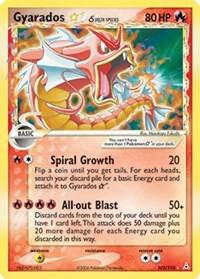
Gyarados Star (Delta Species)
Holon Phantoms · 102/110 · Ultra Rare
Market Price
$2,000
Low/High
$2,000 - $2,000
PSA 10
$98,888
30-Day Trend
+0.0%
2. Charizard Star (Delta Species) (Dragon Frontiers)
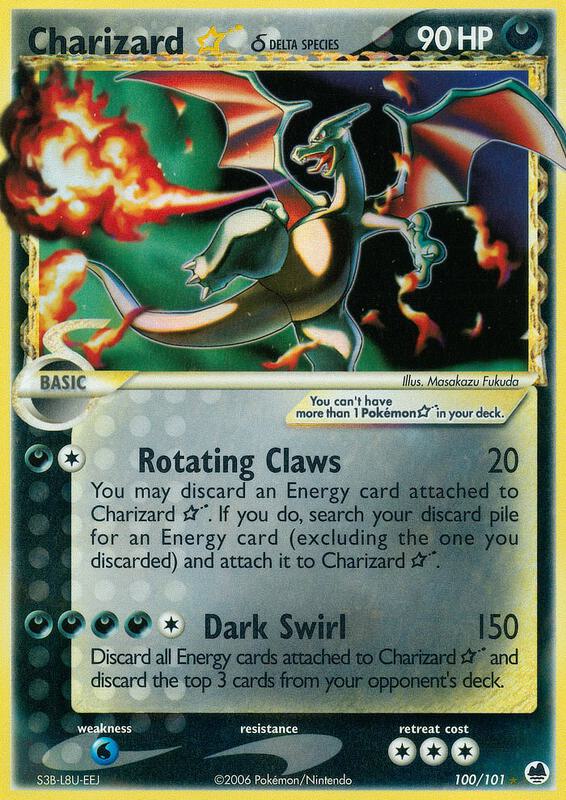
Charizard Star (Delta Species)
Dragon Frontiers · 100/101 · Ultra Rare
Market Price
$599.00
Low/High
$599.00 - $599.00
PSA 10
$58,723
30-Day Trend
+0.0%
3. Mew Star (Delta Species) (Dragon Frontiers)
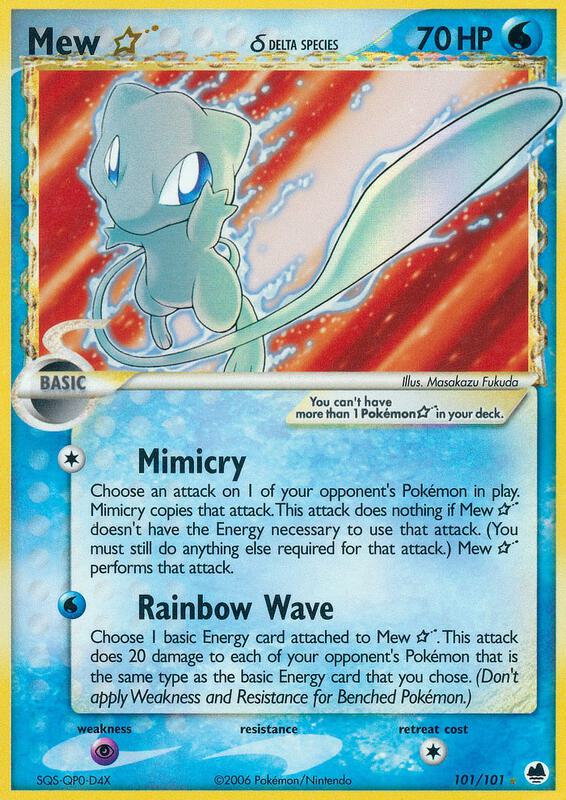
Mew Star (Delta Species)
Dragon Frontiers · 101/101 · Ultra Rare
Market Price
$1,700
Low/High
$1,700 - $1,700
PSA 10
$57,500
30-Day Trend
+0.0%
4. Poncho-wearing Pikachu - 230/XY-P (XY Promos)
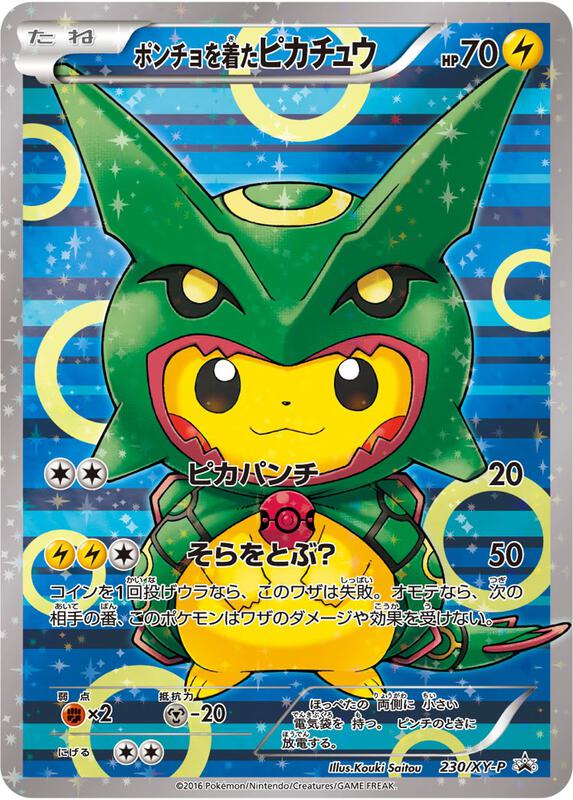
Poncho-wearing Pikachu - 230/XY-P
XY Promos · 230 · Promo
Market Price
$3,599
Low/High
$3,599 - $3,599
PSA 10
$9,650
30-Day Trend
—
5. Poncho-wearing Pikachu - 230/XY-P (Japanese) (XY-P: XY Promos)
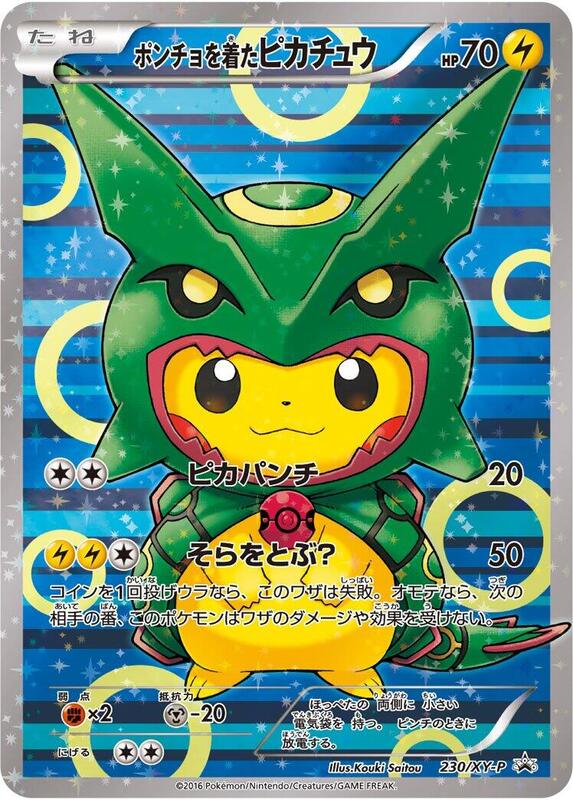
Poncho-wearing Pikachu - 230/XY-P (Japanese)
XY-P: XY Promos · 230/XY-P · Common
Market Price
$4,000
Low/High
$4,000 - $4,000
PSA 10
$11,000
30-Day Trend
+0.0%
6. Latios Star (Deoxys)
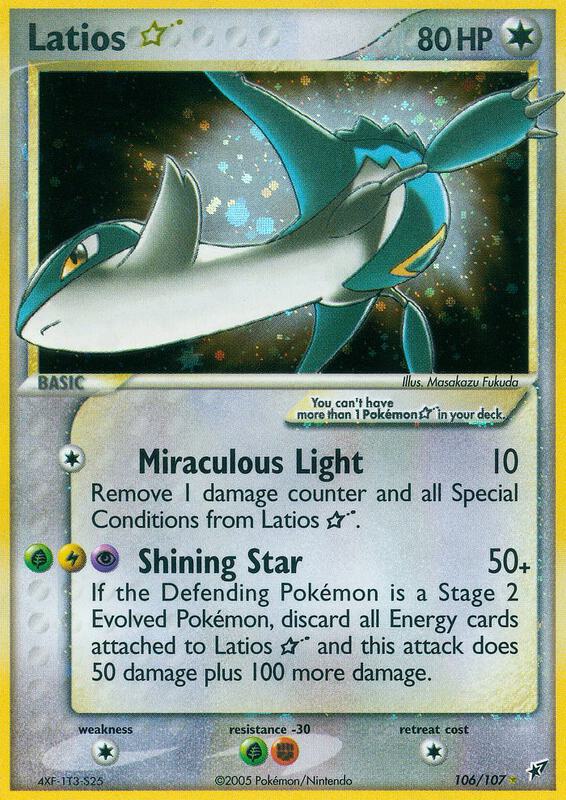
Latios Star
Deoxys · 106/107 · Ultra Rare
Market Price
$1,141
Low/High
$1,141 - $1,141
PSA 10
$51,100
30-Day Trend
—
7. Pikachu (1) (WoTC Promo)

Pikachu (1)
WoTC Promo · 01/53 · Promo
Market Price
$27.64
Low/High
$25.76 - $38.00
PSA 10
$750.00
30-Day Trend
+0.0%
8. Pikachu Star (Holon Phantoms)
Pikachu Star
Holon Phantoms · 104/110 · Ultra Rare
Market Price
$3,200
Low/High
$3,200 - $3,200
PSA 10
$50,000
30-Day Trend
+0.0%
9. Lugia (Aquapolis)
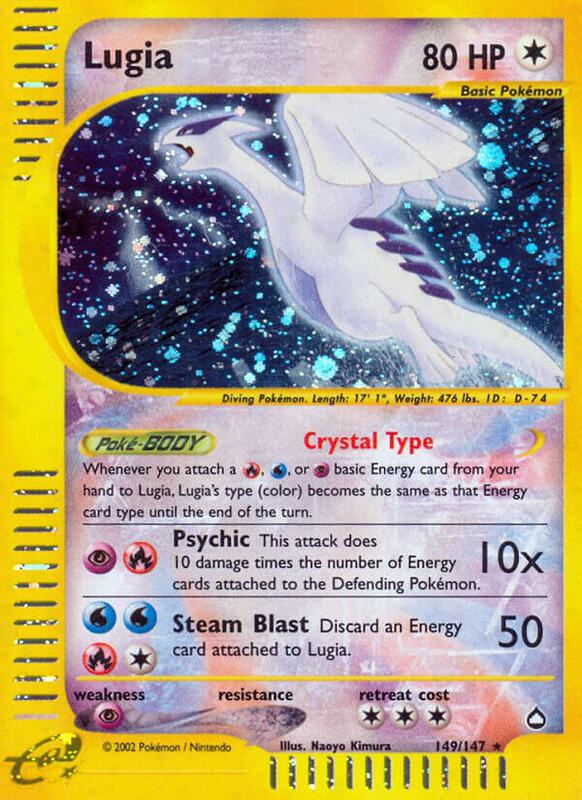
Lugia
Aquapolis · 149/147 · Secret Rare
Market Price
$2,500
Low/High
$2,500 - $2,500
PSA 10
$41,500
30-Day Trend
+0.0%
10. Charizard (Deck Exclusives)
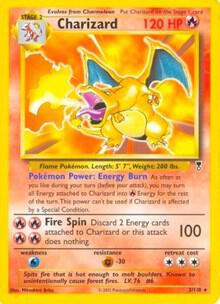
Charizard
Deck Exclusives · 003/110 · Rare
Market Price
$180.64
Low/High
$177.60 - $177.60
PSA 10
$3,800
30-Day Trend
+0.0%
The Rarity Tiers and What Each One Prices At
The Pokemon TCG rarity system has grown over 25+ years, and each tier comes with its own price expectation. Knowing the tier before you check tells you whether you are looking at bulk or a real card:
Common (● Circle)
Printed heavily, several per pack. Prices at $0.05-$0.25, though vintage Base Set commons check in at $1-$5 and 1st Edition Base Set commons at $10-$50+.
Uncommon (◆ Diamond)
Mid pull rate, pricing at $0.10-$0.50 in most cases. The exceptions worth checking are vintage uncommons with unique art or 1st Edition stamps.
Rare (★ Star)
One per pack, covering both non-holo and holo. Non-holo rares price at $0.25-$2. Holo rares are where checking pays off: modern holo rares price at $1-$10, while vintage WOTC holo rares can check in anywhere from $10 to $5,000+.
Ultra Rare (★★ and above)
Above standard rare, including EX, GX, V, VMAX, VSTAR, and ex cards with Full Art or special art. Pull rates run from 1-in-6 to 1-in-60+ packs, and prices range from $2 to $200+.
Secret Rare
Numbered past the set total (such as 201/198): Gold cards, Rainbow Rares, and other premium variants. Prices run $5 to $300+ by rarity and Pokemon.
Special Art Rare / Illustration Rare
The modern chase tier, from Sword & Shield Alt Arts to Scarlet & Violet SAR and SIR cards. These price highest among modern pulls, from $10 to $3,500+.
Run any card through our price checker to confirm its tier and pull its current market price in one step.
Vintage Rare Card Prices (WOTC Era)
Vintage rares from the Wizards of the Coast era (1999-2003) price highest and check most consistently. Here are the current ranges on the top vintage rares collectors look up most:
Base Set (1999)
- Charizard Holo (#4): Raw: $80-$300 | PSA 10: $5,000+ | 1st Ed PSA 10: $300,000-$420,000
- Blastoise Holo (#2): Raw: $30-$80 | PSA 10: $3,000+ | 1st Ed PSA 10: $40,000-$60,000
- Venusaur Holo (#15): Raw: $20-$60 | PSA 10: $2,500+ | 1st Ed PSA 10: $25,000-$35,000
- Alakazam Holo (#1): Raw: $15-$40 | PSA 10: $1,500+
- Chansey Holo (#3): Raw: $10-$30 | PSA 10: $1,200+
Neo Genesis (2000)
- Lugia Holo (#9): Raw: $50-$150 | PSA 10: $3,000+ | 1st Ed PSA 10: $80,000-$130,000
- Typhlosion Holo (#17): Raw: $20-$50 | PSA 10: $1,500+
Skyridge & Aquapolis (2003)
- Skyridge Charizard Holo (#H3): Raw: $500-$2,000 | PSA 10: $15,000+
- Skyridge Celebi Holo (#H3): Raw: $100-$300 | PSA 10: $5,000+
- Aquapolis Lugia Holo (#H20): Raw: $200-$500 | PSA 10: $8,000+
Team Rocket (2000)
- Dark Charizard Holo (#4): Raw: $30-$80 | PSA 10: $2,000+ | 1st Ed PSA 10: $10,000+
- Dark Blastoise Holo (#3): Raw: $15-$40 | PSA 10: $1,000+
ex Era (2003-2007)
- Charizard Gold Star (Dragon Frontiers): Raw: $1,000-$5,000 | PSA 10: $30,000+
- Rayquaza Gold Star (Deoxys): Raw: $800-$2,000 | PSA 10: $20,000+
- Umbreon Gold Star (POP Series 5): Raw: $1,500-$4,000 | PSA 10: $25,000+
Vintage rares hold a price floor in any condition: even a beat-up Base Set Charizard checks in at $30-$60. But condition is the main lever, and the jump from PSA 8 to PSA 10 can be 5-10x, so always compare to the matching grade.
Modern Rare Card Prices (2020-Present)
Modern rares from 2020 on now price alongside mid-tier vintage. Here are the current ranges on the modern rares people check most:
Sword & Shield Era (2020-2023)
- Umbreon VMAX Alt Art (Evolving Skies #215): Raw: $200-$350 | PSA 10: $3,500+
- Charizard VSTAR Rainbow (Brilliant Stars #174): Raw: $80-$150 | PSA 10: $400+
- Giratina VSTAR Alt Art (Lost Origin #131): Raw: $70-$120 | PSA 10: $300+
- Rayquaza VMAX Alt Art (Evolving Skies #218): Raw: $120-$250 | PSA 10: $800+
- Moonbreon / Espeon VMAX Alt Art (Evolving Skies #216): Raw: $50-$100 | PSA 10: $350+
- Gengar VMAX Alt Art (Fusion Strike #271): Raw: $80-$150 | PSA 10: $400+
- Charizard VMAX Rainbow (Champion's Path #74): Raw: $100-$250 | PSA 10: $600+
Scarlet & Violet Era (2023-present)
- Charizard ex SIR (Obsidian Flames #223): Raw: $80-$150 | PSA 10: $350+
- Charizard ex SAR (151 #199): Raw: $150-$300 | PSA 10: $600+
- Umbreon ex SAR (Shrouded Fable): Raw: $50-$120 | PSA 10: $250+
- Mew ex SAR (151 #205): Raw: $40-$80 | PSA 10: $200+
- Eevee SIR (151 #198): Raw: $30-$60 | PSA 10: $150+
Modern chase cards can climb over time: Evolving Skies cards have priced up 2-3x since release. Watch the trend line on our price checker to catch which modern rares are gaining before you buy or sell.
Promo and Trophy Card Prices
Some of the highest-pricing rares never came in a booster pack at all. Promo and trophy cards went out at tournaments, events, and special promotions, which makes them genuinely scarce and a category you cannot price by rarity symbol alone:
Tournament and Trophy Cards
- Pikachu Illustrator: The highest price ever paid for a Pokemon card at $5.275 million. Awarded to illustration contest winners in Japan in 1997-1998, with about 39 copies believed to exist.
- No. 1 Trainer (Super Secret Battle): A Japanese tournament prize that prices at $100,000-$400,000 by grade.
- Trophy Pikachu Gold / Silver / Bronze: Late-1990s prize cards. Gold versions price at $50,000-$150,000+.
- Kangaskhan Parent/Child Trophy: A 1998 Japanese tournament award pricing at $50,000-$150,000+.
Event Promo Cards
- Corocoro Mew Promo: A 1996 Japanese magazine promo, pricing at $200-$1,000 by condition and version.
- Ancient Mew (Movie Promo): Handed out at Pokemon 2000 screenings. Sealed copies price at $20-$50, open at $5-$15.
- Pokemon Center Promo Cards: Japanese Pokemon Center exclusives, with rare versions pricing at $50-$500+.
- Staff Prerelease Promos: Given to event staff and far scarcer than player versions; staff stamps add 5-10x over player promos.
Trophy and promo cards live in their own pricing world. If you have promos with unusual stamps, logos, or distribution stories, check each one individually: they often price well above standard cards from the same era.
Error Card and Misprint Prices
Error cards and misprints are a niche corner of the market that can return surprising prices when you check them. Factory mistakes create one-off cards that dedicated collectors pay up for:
Famous error cards:
- "No Damage Ninetales" (Base Set): A first-print error missing the damage value on Ninetales Holo. Prices at $500-$5,000+ by condition.
- "No Symbol" Jungle/Fossil Cards: Early runs that dropped the set symbol. These price at 2-5x the corrected versions.
- "Red Cheeks Pikachu" (Base Set): The first run gave Pikachu red cheeks on the art. A recognized variant; 1st Edition copies price at $500-$1,000 in PSA 10.
- Miscut cards: Cut badly off-center, showing parts of neighboring cards. Dramatic miscuts price at $50-$500+ by severity and base card.
- Crimped cards: Packaging crimps or sealing marks. Minor crimps add a little; dramatic crimps on valuable cards price at $100-$1,000+.
- Wrong-back / dual-back cards: Wrong card back, or two fronts / two backs. Extremely scarce, pricing at $500-$5,000+.
How to tell if your misprint will check in high:
- It must be a factory defect, not handling damage
- More dramatic errors price higher: a slight off-center is not the same as a hard miscut showing two cards
- Errors on valuable base cards (Charizard, Pikachu) price highest
- Authenticated errors (PSA or CGC with the error noted) price higher because buyers trust them
If you suspect an error, compare it closely to confirmed correct versions before checking prices. True factory errors are scarce and collectible; ordinary wear is not an error and will not price like one.
Japanese Exclusive Rare Card Prices
The Japanese market has its own set of exclusive rares that never got English prints, and many price strongly with global collectors. These are easy to undervalue if you do not check them:
Japanese-only sets and promos:
- Masaki Promo Set (1996): Five evolution promos (Gengar, Alakazam, Golem, Machamp, Omastar) from a mail-in campaign. Complete sets price at $500-$2,000+; singles at $100-$500.
- Tamamushi University Magikarp: A 1998 quiz tournament prize. Extremely scarce, pricing at $10,000-$50,000+.
- Pokemon Web Series: A 2001 Japan-only set with unique designs. Complete holos price at $30-$200 each.
- Japanese Promo Cards: Japan gets dozens of exclusive promos a year. Cards like the Munch collaboration ("The Scream" Pikachu, Eevee, Psyduck) price at $100-$500+.
Why Japanese cards can price higher:
- Earlier print dates: Japanese cards print before English, effectively making them first globally
- Exclusive artwork: Some carry art never used on English cards
- Higher print quality: Generally regarded as having better printing and stock
- Lower PSA populations: Fewer get graded, so high grades price higher
Do not assume Japanese cards are worthless. Japanese holos from early sets (Base Set, Jungle, Fossil) price at $5-$50+ each, and rare promos can check in at hundreds or thousands. Use our price checker for Japanese card prices.
How Condition Changes the Price You Check
For rare cards, condition is the multiplier that decides the price. Two identical cards can check in 100x apart on condition alone. Here is what each grade typically returns on a rare:
PSA 10 (Gem Mint): The top price tier with the steepest premiums. A rare that checks in at $20 raw might price at $100-$200 in PSA 10. A Base Set Charizard jumps from $80-$300 raw to $5,000+ in PSA 10.
PSA 9 (Mint): One minor flaw allowed. Prices at 30-60% of PSA 10 and is the value sweet spot for many buyers who want graded without PSA 10 prices.
PSA 8 (Near Mint-Mint): Light wear under close inspection. Usually 15-25% of PSA 10, solid for vintage where PSA 10 copies are scarce.
PSA 7 (Near Mint): Some visible edge or corner wear. Typically 10-15% of PSA 10, still collectible at a discount.
PSA 5-6 (Excellent to Light Play): Noticeable wear, possible light scratching. Prices at 3-10% of PSA 10.
PSA 1-4 (Poor to Good): Heavy wear, creases, or damage. Prices at 1-5% of PSA 10, though even a PSA 1 Base Set Charizard checks in at $50-$100.
Keeping your rares at the higher price tiers:
- Use penny sleeves + top-loaders right away
- Store in a cool, dry spot: humidity warps cards and peels foil
- Avoid rubber bands or binder rings that dent or bend
- Handle by the edges only: surface fingerprints cost grades
- Consider grading for rares pricing at $50+ to lock the condition in
Price-Checking and Selling Your Rare Cards
Think you have a rare worth real money? Here is the price-check-first workflow for selling rare Pokemon cards at the right number:
Step 1: Identify the exact print
Note card name, set symbol, card number, and rarity symbol, for example "Charizard, Base Set, #4/102, Holo Rare." This pins down the exact card so your price check is accurate.
Step 2: Judge condition honestly
Check surface scratches, edge whitening, corner wear, and centering under bright light. Be honest: overrating condition wrecks your price comparison. If it looks pristine, it may be a PSA 9-10 candidate worth checking against graded prices.
Step 3: Pull the current price
Run it through our free price checker for raw and graded prices, then cross-check TCGPlayer market price and eBay sold listings. Always use sold listings, never active ones: asking prices are inflated.
Step 4: Decide whether to grade
If the raw price checks in at $50+ and the card looks Near Mint or better, grading can lift it well past the fee. A raw $100 card at PSA 10 could become a $500+ card.
Step 5: Pick a platform
- eBay: Largest audience, auction or Buy It Now. Best for high-value and graded cards. Fees ~13%.
- TCGPlayer: Dedicated card marketplace, good for raw. Fees ~11-13%.
- Facebook Groups: Lower fees, needs trust. Good for mid-range cards.
- Local card shops: Instant cash, usually 40-60% of market.
- Card shows: Good for bulk and networking with serious buyers.
Step 6: List against the data
Shoot clear, well-lit photos of front, back, and any notable features. Price off the 5 most recent sold listings for the same card in matching condition. Timing helps: listing before holidays or during hype can lift your number.
For rares pricing at $500+, consider a reputable Pokemon-focused auction house. They take 10-15% but can clear higher final prices through their buyer networks. Tools like Poketrace help track prices and time the sale.