What Pokemon Cards Sell For (and How to Check Yours)
Last updated: February 2026
| # | Card | Set | Market Price | PSA 10 | 30-Day Trend |
|---|---|---|---|---|---|
| 1 | Gyarados Star (Delta Species) | Holon Phantoms | $2,000 | $98,888 | +0.0% |
| 2 | Charizard Star (Delta Species) | Dragon Frontiers | $599.00 | $58,723 | +0.0% |
| 3 | Mew Star (Delta Species) | Dragon Frontiers | $1,700 | $57,500 | +0.0% |
| 4 | Poncho-wearing Pikachu - 230/XY-P | XY Promos | $3,599 | $9,650 | — |
| 5 | Poncho-wearing Pikachu - 230/XY-P (Japanese) | XY-P: XY Promos | $4,000 | $11,000 | +0.0% |
| 6 | Latios Star | Deoxys | $1,141 | $51,100 | — |
| 7 | Pikachu (1) | WoTC Promo | $27.64 | $750.00 | +0.0% |
| 8 | Pikachu Star | Holon Phantoms | $3,200 | $50,000 | +0.0% |
| 9 | Lugia | Aquapolis | $2,500 | $41,500 | +0.0% |
| 10 | Charizard | Deck Exclusives | $180.64 | $3,800 | +0.0% |
| 11 | Latias Star | Deoxys | N/A | $37,500 | — |
| 12 | Gengar (H9) | Skyridge | $7,386 | $34,905 | — |
| 13 | Charizard | Legendary Collection | $500.00 | $34,100 | +0.0% |
| 14 | Charizard (Japanese) | Mysterious Mountains | N/A | $24,000 | — |
| 15 | Rayquaza Star | Deoxys | $2,501 | $9,898 | +0.0% |
| 16 | Poncho-wearing Pikachu - 207/XY-P | XY Promos | $7,211 | $27,000 | — |
| 17 | Dark Dragonite | Legendary Collection | $509.99 | $26,000 | +0.0% |
| 18 | Vaporeon Star | Power Keepers | $457.00 | $1,075 | +0.0% |
| 19 | Charizard G | Supreme Victors | $94.24 | $24,950 | +0.0% |
| 20 | Mewtwo Star | Holon Phantoms | $2,002 | $24,500 | +0.0% |
1. Gyarados Star (Delta Species) (Holon Phantoms)
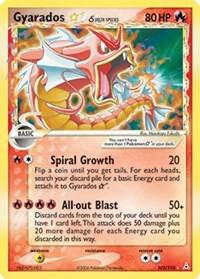
Gyarados Star (Delta Species)
Holon Phantoms · 102/110 · Ultra Rare
Market Price
$2,000
Low/High
$2,000 - $2,000
PSA 10
$98,888
30-Day Trend
+0.0%
2. Charizard Star (Delta Species) (Dragon Frontiers)
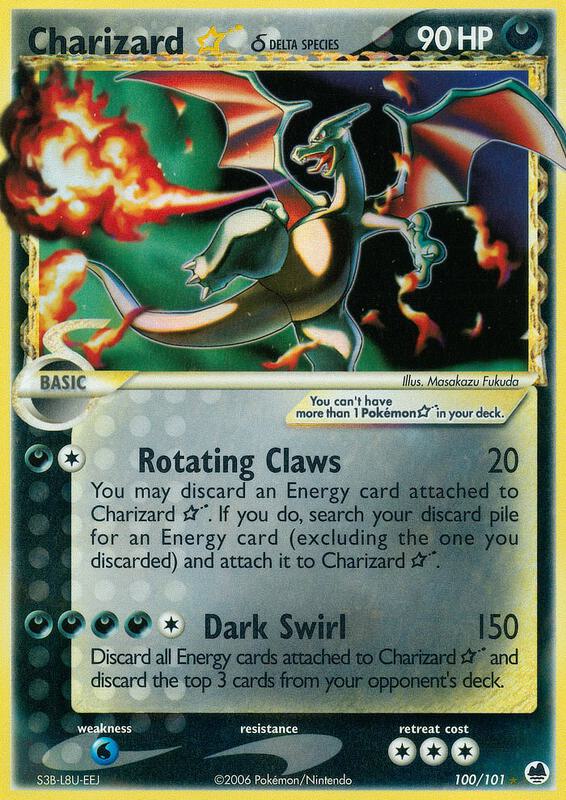
Charizard Star (Delta Species)
Dragon Frontiers · 100/101 · Ultra Rare
Market Price
$599.00
Low/High
$599.00 - $599.00
PSA 10
$58,723
30-Day Trend
+0.0%
3. Mew Star (Delta Species) (Dragon Frontiers)
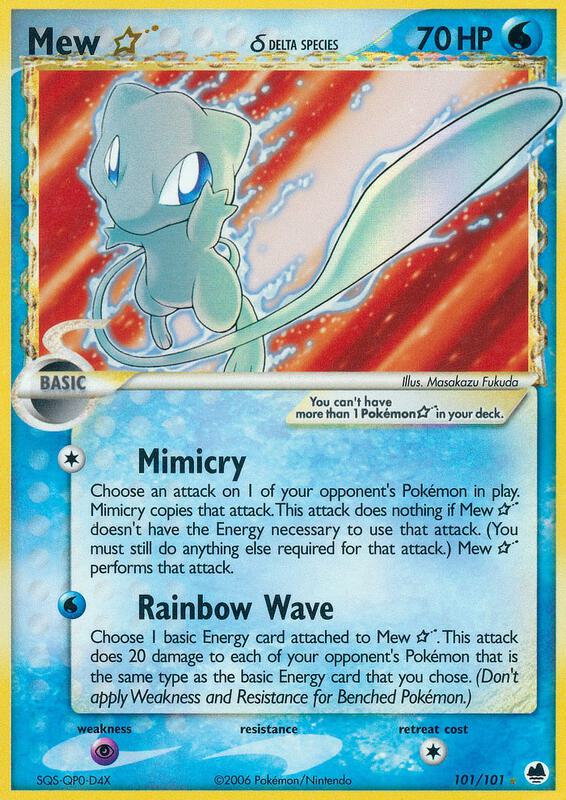
Mew Star (Delta Species)
Dragon Frontiers · 101/101 · Ultra Rare
Market Price
$1,700
Low/High
$1,700 - $1,700
PSA 10
$57,500
30-Day Trend
+0.0%
4. Poncho-wearing Pikachu - 230/XY-P (XY Promos)
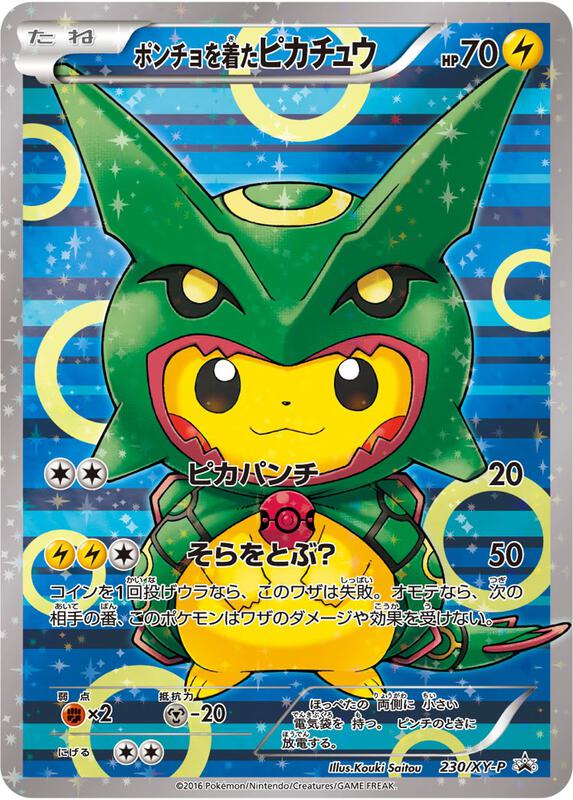
Poncho-wearing Pikachu - 230/XY-P
XY Promos · 230 · Promo
Market Price
$3,599
Low/High
$3,599 - $3,599
PSA 10
$9,650
30-Day Trend
—
5. Poncho-wearing Pikachu - 230/XY-P (Japanese) (XY-P: XY Promos)
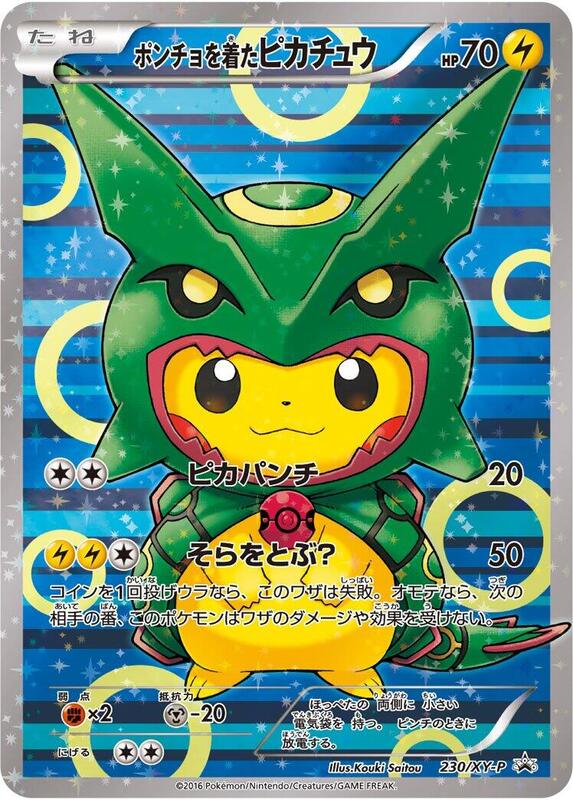
Poncho-wearing Pikachu - 230/XY-P (Japanese)
XY-P: XY Promos · 230/XY-P · Common
Market Price
$4,000
Low/High
$4,000 - $4,000
PSA 10
$11,000
30-Day Trend
+0.0%
6. Latios Star (Deoxys)
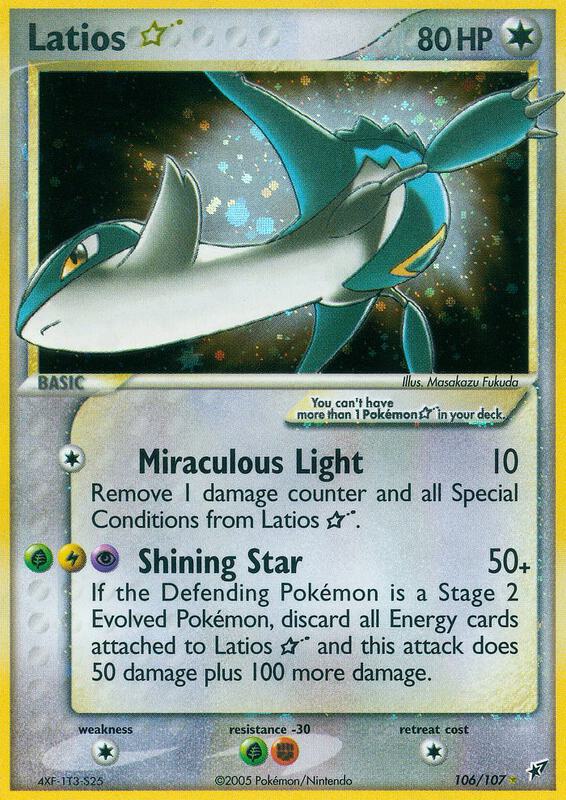
Latios Star
Deoxys · 106/107 · Ultra Rare
Market Price
$1,141
Low/High
$1,141 - $1,141
PSA 10
$51,100
30-Day Trend
—
7. Pikachu (1) (WoTC Promo)

Pikachu (1)
WoTC Promo · 01/53 · Promo
Market Price
$27.64
Low/High
$25.76 - $38.00
PSA 10
$750.00
30-Day Trend
+0.0%
8. Pikachu Star (Holon Phantoms)
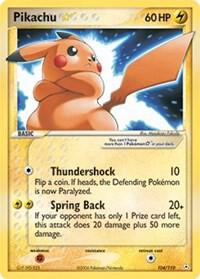
Pikachu Star
Holon Phantoms · 104/110 · Ultra Rare
Market Price
$3,200
Low/High
$3,200 - $3,200
PSA 10
$50,000
30-Day Trend
+0.0%
9. Lugia (Aquapolis)
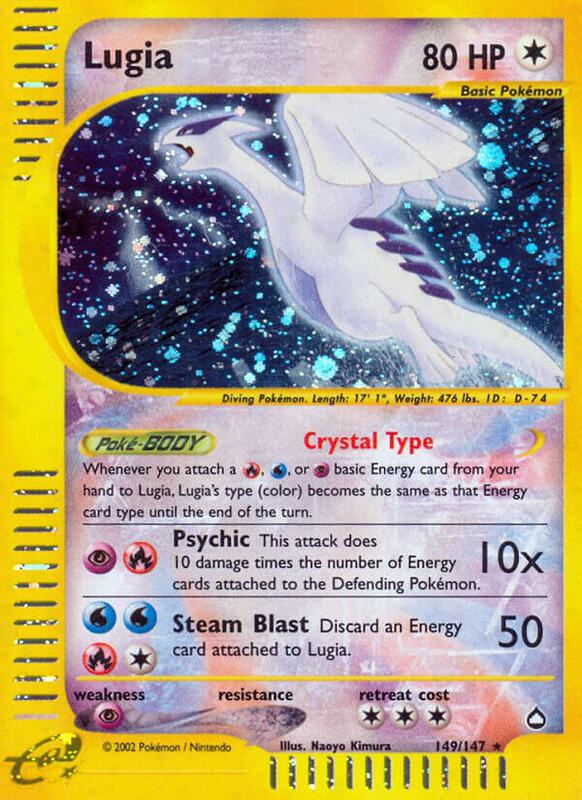
Lugia
Aquapolis · 149/147 · Secret Rare
Market Price
$2,500
Low/High
$2,500 - $2,500
PSA 10
$41,500
30-Day Trend
+0.0%
10. Charizard (Deck Exclusives)
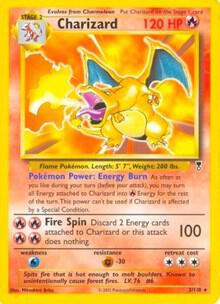
Charizard
Deck Exclusives · 003/110 · Rare
Market Price
$180.64
Low/High
$177.60 - $177.60
PSA 10
$3,800
30-Day Trend
+0.0%
What Sets the Price of a Pokemon Card?
Knowing what drives a card's price is what lets you read a price check instead of just staring at a number. Seven factors set the price of any card, and the cards that sell highest usually score on several at once.
1. Rarity. The bottom-right symbol marks the tier: circle (Common), diamond (Uncommon), or star (Rare). Inside Rare there are sub-levels that move the price hard: Holo Rare, Ultra Rare, Secret Rare, Special Illustration Rare (SIR), Special Art Rare (SAR), and Hyper Rare. Higher tier, fewer copies, higher price. A common Pidgey sells for $0.02; a Special Illustration Rare Charizard from the same set can sell for $300. WOTC sets had three tiers; modern Scarlet & Violet sets can have six or more.
2. Condition. A PSA 10 (Gem Mint) copy can sell for 5x-50x the played version. The premium for perfection is enormous, and even PSA 9 to PSA 10 is often a 50-80% jump. For old cards, condition is decisive because mint 1990s survivors are genuinely scarce: most kids never sleeved them.
3. Age and print run. Older cards, especially WOTC era (1999-2003), printed in smaller runs and survived in mint far less often. Scarcity lifts the price, which is why 1st Edition Base Set cards sell so high. The e-Reader sets (Expedition, Aquapolis, Skyridge, 2002-2003) had especially low runs as the first hype wave faded, making them some of the scarcest English products.
4. Pokemon species. Charizard sells for more than Rattata, full stop. The top-demand species are Charizard, Pikachu, Umbreon, Rayquaza, Mewtwo, Gengar, Lugia, Mew, and the Eevee evolutions. A holo Charizard from almost any set sells above a holo of a less popular Pokemon from the same set.
5. Special features. 1st Edition stamps, Shadowless prints, holo finishes, Alternate Art, Gold Star, Crystal types, Shining Pokemon, Trainer Gallery, and Secret Rare numbering all sell above the standard version. A 1st Edition stamp can multiply the price 2x to 50x over the Unlimited print.
6. Artwork quality. Cards with standout art, especially Alt Arts and SIRs with real-world scenes instead of action poses, sell highest. The Umbreon VMAX Alt Art from Evolving Skies, with Mitsuhiro Arita's moonlit cityscape, sells at $3,500-$5,000 in PSA 10. Artists like Arita, HYOGONOSUKE, kirisAki, and Kouki Saitou have become draw names buyers chase.
7. Competitive playability. Tournament-staple cards carry a price floor from player demand. It is less permanent than collectibility (prices drop when cards rotate out), but Trainer cards like Boss's Orders, Arven, and Iono, and strong ex cards, can spike while they are meta. Once they rotate, prices usually fall unless they also have collector appeal.
Want to see these factors land on a real number? Check any card on our free price checker.
What Vintage Pokemon Cards Sell For (1999-2003)
Wondering what the original-era cards sell for? Many of them sell high, especially in good condition. The WOTC era runs Base Set through Skyridge and holds the blue-chip cards of the hobby: proven, scarce, and always in demand.
Base Set (1999) is the most iconic set ever printed. The 1st Edition Charizard Holo (#4) is the most famous card in existence, selling at $420,000 in PSA 10. Other Base Set holos sell strong: Blastoise ($30,000 PSA 10 1st Edition), Venusaur ($20,000), Mewtwo ($15,000), Alakazam ($12,000), Chansey ($8,000), Gyarados ($7,000), Hitmonchan ($6,000), and Raichu ($5,500). Even Unlimited holds value: Charizard Unlimited PSA 10 sells at $5,000-$8,000, other Unlimited holos at $500-$4,000 in PSA 10. The Shadowless variant sits between the two printings, with Shadowless Charizard PSA 10 at $30,000-$50,000.
Jungle and Fossil (1999) hold Holo Rares like Jolteon, Flareon, Vaporeon, Gengar, Lapras, Dragonite, Muk, and Hitmonlee. 1st Edition PSA 10 copies of the popular holos sell at $2,000-$7,000, led by Gengar and the Eeveelutions. Fossil Dragonite Holo is underrated and regularly sells at $3,000-$5,000 in 1st Edition PSA 10.
Team Rocket (2000) introduced "Dark" Pokemon. Dark Charizard Holo in 1st Edition PSA 10 sells at $8,000-$12,000, Dark Blastoise at $3,500-$5,000. The first English Secret Rare, Dark Raichu (#83/82), sells around $2,000-$3,500 in PSA 10. Dark Dragonite, Dark Arbok, and Dark Hypno are cheaper at $800-$2,500 in top grades.
Gym sets (2000) feature trainer-themed cards. Blaine's Charizard ($5,000-$8,000 PSA 10 1st Edition), Sabrina's Gengar ($2,000-$3,000), Lt. Surge's Raichu ($1,500-$2,500), Erika's Vileplume ($1,000-$2,000), and Giovanni's Gyarados ($1,000-$2,000) lead. Popular with collectors who grew up on the anime.
Neo series (2000-2002) introduced Shining Pokemon. Shining Charizard from Neo Destiny in 1st Edition PSA 10 sells at $10,000-$20,000. Shining Mewtwo, Gyarados, and Celebi sell at $3,000-$8,000 each. Neo Genesis Lugia Holo, the first English Lugia, sells at $3,000-$6,000 in 1st Edition PSA 10. Shining Magikarp from Neo Revelation sells at $2,000-$4,000 in top grades.
e-Reader sets (2002-2003): Expedition, Aquapolis, and Skyridge had low runs and are now scarce. Skyridge Charizard Holo (#146) in PSA 10 has sold for $40,000+, rivaling the Shadowless Base Set Charizard. Crystal-type cards (Crystal Charizard, Lugia, Ho-Oh, Celebi, Nidoking) sell at $5,000-$18,000 in top grades. Reverse holos from these sets can sell at $10-$200, well above other eras.
Vintage is the blue-chip segment. Even in PSA 5-7, iconic cards from this era sell for hundreds or thousands. Holding WOTC cards? Check the current price of any of them on our price checker.
What Modern Pokemon Cards Sell For (2020-2026)
What do recent cards sell for? Sword & Shield and Scarlet & Violet expansions have produced chase cards that sell alongside mid-tier vintage, and you can still pull them from sealed product. Knowing what to look for lets you flag a valuable pull the moment you open it.
Sword & Shield era (2020-2023):
- Umbreon VMAX Alt Art (#215, Evolving Skies): the top modern card at $3,500-$5,000 PSA 10. Raw NM sells at $300-$500. Pull rate roughly 1 in 700 packs.
- Rayquaza VMAX Alt Art (#218, Evolving Skies): $600-$1,000 PSA 10; raw NM $150-$250
- Giratina VSTAR Alt Art (#131, Lost Origin): $400-$700 PSA 10; raw NM $80-$120
- Moonbreon / Umbreon VMAX TG30 (Brilliant Stars): $500-$800 PSA 10; the Trainer Gallery nighttime version
- Charizard VSTAR Rainbow (#174, Brilliant Stars): $200-$350 PSA 10
- Gengar VMAX Alt Art (#271, Fusion Strike): $250-$400 PSA 10
- Mew VMAX Alt Art (#269, Fusion Strike): $200-$350 PSA 10
- Dragonite V Alt Art (#203, Evolving Skies): $150-$250 PSA 10
- Leafeon VMAX Alt Art (#205, Evolving Skies): $150-$250 PSA 10
- Glaceon VMAX Alt Art (#209, Evolving Skies): $150-$250 PSA 10
Evolving Skies is the highest-selling single set of the era thanks to its Eeveelution Alt Arts. A complete PSA 10 set of all its Alternate Arts sells for over $8,000 combined.
Scarlet & Violet era (2023-2026):
- Charizard ex SAR (#199, Obsidian Flames): raw $80-$120; PSA 10 $250-$400
- Charizard ex SIR (#223, 151): PSA 10 $300-$500; raw NM $100-$180
- Pikachu ex SIR (#230, Surging Sparks): PSA 10 $200-$350
- Mew ex SAR (#232, Paldea Evolved): PSA 10 $150-$250
- Miraidon ex SAR (#244, SV Base): PSA 10 $100-$180
- Eevee ex SIR (#235, Prismatic Evolutions): PSA 10 $150-$280
- Umbreon ex SIR (#244, Prismatic Evolutions): PSA 10 $200-$400
- Mew ex SIR (#205, 151): PSA 10 $150-$300
- Gardevoir ex SIR (#245, Paldea Evolved): PSA 10 $80-$150
The 151 subset is one of the few modern sets that sells up consistently after release rather than dropping, thanks to Kanto nostalgia and its SIR cards. Prismatic Evolutions (2025) followed the same path, with Eeveelution SIRs driving demand.
Modern prices ride artwork quality and Pokemon popularity more than pure scarcity. Alt Art and SIR cards with breathtaking illustrations by Arita, HYOGONOSUKE, and kirisAki sell highest. Unlike vintage, where 1st Edition and print run dominate, modern cards live and die on visual appeal and the Pokemon featured. Track every modern price on our price checker.
Common Cards That Quietly Sell for Money
Not every card that sells well looks the part. Some plain-looking cards you would write off as bulk actually sell for surprising prices. If you are checking what your cards sell for beyond the obvious holos, run these overlooked categories through a price check before tossing anything.
Error cards and misprints. Printing mistakes turn ordinary cards collectible. "No Symbol" Base Set cards (Jungle or Fossil printed without their set symbol) sell at $50-$500 by card and condition. The "d Edition" Wartortle (a corrupted "1st Edition" stamp) sells at $1,000+. The Base Set "Ninetales" error (wrong stage or HP) is another known case. Off-center cuts, crimped cards, and miscuts (showing parts of neighbors) have niche markets where rare errors sell for hundreds or thousands. A dramatic miscut holo showing two cards on one piece of cardboard can sell for $200-$1,000+.
Pre-release and staff promos. Cards stamped "PRERELEASE" or "STAFF" hide in binders but sell at $20-$200 for player promos and $100-$1,000+ for staff promos. Staff promos went only to organizers and judges, so they are far scarcer: a staff-stamped Charizard sells at 3x-10x the player version. Vintage WOTC pre-release promos like Misty's Seadra or Clefable sell at $50-$200 in PSA 10.
Reverse holos from older sets. Reverse holos from the e-Reader era (Expedition, Aquapolis, Skyridge) are far scarcer than their regular counterparts and often dumped as bulk. A Skyridge reverse that looks like a throwaway can sell at $10-$200+. Even Diamond & Pearl and Platinum reverses can sell at $5-$50 for popular Pokemon.
Japanese-exclusive promos. Japan-only cards from magazines, events, and retail tie-ins are routinely undervalued by Western collectors. The Pikachu Van Gogh promo from the 2023 Amsterdam collaboration ($200-$400), CoroCoro Shining Mew ($300-$600), the Munch / Scream Pikachu ($300-$600), and tournament prize cards all sell high. Japanese McDonald's promos, Pokemon Center birthday Pikachus, and regional prize cards are worth checking too.
Trainer cards from competitive sets. While collectors chase Pokemon art, competitive players drive Trainer prices. Computer Search (Ace Spec, $15-$25), Professor's Research Full Art ($15-$40), N Full Art from Noble Victories ($80-$200), and Lillie Full Art from Ultra Prism ($40-$100) sell well above bulk. Iono Full Art and SAR from Paldea Evolved are modern examples at $20-$80.
Complete common/uncommon sets. Individual commons sell at $0.01-$0.05, but a complete near-mint common/uncommon run from a vintage WOTC set sells at $50-$200 to master-set collectors. An easy way to turn would-be bulk into a sale.
Energy cards from special sets. Secret Rare energy cards from Scarlet & Violet, Chilling Reign, and Evolving Skies sell at $5-$30 each. Gold Secret Rare energy from older sets like Sword & Shield base sells at $15-$50. Easy to overlook as "just energy," but the special art versions sell.
The rule: do not throw anything out until you have checked it. Run any card, even ordinary-looking ones, through our price checker first.
How Condition Moves the Price at Each Grade
How do you tell what a card sells for? Start with condition. Physical state is often the difference between a $50 card and a $5,000 card. Understanding the scale and what graders look for lets you estimate the price before you ever pay for grading.
The PSA scale is the standard, running PSA 1 (Poor) to PSA 10 (Gem Mint). Most of the price concentrates in the top grades on a steep curve:
- PSA 10 (Gem Mint): The standard. Flawless centering (55/45 front, 75/25 back), pristine corners, clean edges, no surface flaws. Sells at 2x-10x the PSA 9 price.
- PSA 9 (Mint): One minor flaw: slight off-centering, a tiny corner spot, or a faint print line. Sells at 20-50% of PSA 10.
- PSA 8 (Near Mint-Mint): Slight wear up close, minor corner whitening or a light scratch. Sells at 10-25% of PSA 10.
- PSA 7 (Near Mint): Moderate wear, minor whitening, maybe a light crease. Sells at 5-15% of PSA 10.
- PSA 5-6 (Excellent): Noticeable wear, small creases, edge nicks, moderate whitening. Sells at 3-8% of PSA 10.
- PSA 1-4 (Poor to Very Good): Heavy wear, creases, bends, damage. Only the rarest cards (1st Edition Base Set Charizard, Pikachu Illustrator) hold meaningful prices here.
Real example, Unlimited Base Set Charizard Holo:
- PSA 10: $5,000-$8,000
- PSA 9: $800-$1,200
- PSA 8: $300-$500
- PSA 7: $150-$250
- PSA 5-6: $75-$150
- Heavily played / ungraded: $50-$100
That is a 50x-100x spread between best and worst condition on the exact same card. The pattern holds across nearly every valuable card: condition is the great multiplier of price.
What graders examine:
- Centering: Even borders all around? Off-centering is the top reason for a PSA 9 instead of 10, since factory cuts are imprecise. Front centering weighs more than back.
- Corners: Sharp and free of whitening, rounding, or dings? Corners wear first; even light shuffling causes micro-whitening visible under magnification.
- Edges: Nicks, chips, peeling, or whitening? On dark-bordered cards (Team Rocket, certain modern), edge silvering shows badly.
- Surface: Scratches, print lines, holo silvering, fingerprints, indentations, ink residue, all examined under magnification and special lighting. Holos show every flaw.
Self-assessment tips: Hold under a bright lamp at multiple angles to find scratches or print lines. Inspect corners with a 60x+ loupe. Measure borders to judge centering. Naked-eye flaws at arm's length mean PSA 7 or below. Perfect to the unaided eye but minor issues under magnification means a PSA 8-9 candidate. Only cards flawless under magnification have a real shot at PSA 10.
What a card is plus what condition it is in equals the price. Our price checker shows both raw and graded prices so you can estimate yours by condition.
How to Check What Your Pokemon Cards Sell For
Knowing general prices is useful, but the real question is how to check your specific cards. Follow this process to price any card in your collection, from a single card to a full binder.
Step 1: Identify the card fully. Find the name at the top, the set symbol near the bottom-right, and the card number at the bottom (e.g., "4/102"). A "1st Edition" stamp on the left can multiply the price 2x to 50x. On modern cards, check for stars (one, two, three), textures, full-bleed art, or rainbow/gold coloring. Check the back too: a standard back confirms a real card, while a different back can mean a promo, World Championship reprint, or counterfeit.
Step 2: Look it up. Enter the card name and set into our free Pokemon card price checker. You will see current prices for raw and graded copies across conditions. It is the fastest, most accurate read because the data aggregates recent sales. If a card is not found, search by number and set on eBay's "Sold Items" filter for real transaction prices.
Step 3: Read condition honestly. Hold under bright light at different angles. Check surface scratches (especially on holos), corner and edge whitening, and centering against the borders. Be brutally honest: overrating condition is the top mistake new sellers make. A card you call "near mint" might read "lightly played" to buyers, dropping the price. When unsure, assume one grade lower.
Step 4: Cross-reference expensive cards. For $50+ cards, verify across sources. Check eBay "Sold" listings (not active ones, which are often aspirational), TCGPlayer market price, and tools like Poketrace for history and volatility. Prices can differ 10-20% between platforms, so cross-referencing gives the most realistic number.
Step 5: Triage a big collection. With hundreds or thousands of cards, do not check each one. Pull all holos, all 1st Edition stamps, all full-art or textured cards, and anything featuring Charizard, Pikachu, Umbreon, Mewtwo, Rayquaza, Gengar, Lugia, or Mew. These hold most of the potential value. Check those first, then scan the rest for errors or oddities.
Step 6: Decide next steps from the prices:
- $100+ in excellent condition: Consider PSA, BGS, or CGC grading. PSA 10 can multiply the price 2x-10x.
- $20-$100: Selling raw on eBay, TCGPlayer, or at a local shop usually beats grading.
- $5-$20: Sell individually on TCGPlayer or in small eBay lots.
- Under $5: Bulk lots, trade at local stores, or keep for your collection.
For a curated view of the highest-selling cards across all eras, see our most valuable Pokemon cards list. Compare your cards against it and focus on any matches first.
Tips for New Collectors: Spotting Cards That Sell
New to collecting and want to find cards that actually sell for money? These tips help you build a valuable collection without the beginner mistakes that cost real money in lost value or overpayment.
1. Learn before you spend. Study eras, releases, and card types before putting down serious money. Follow the community (Reddit's r/PokemonTCG, market-analysis YouTube channels, X for news) and check prices regularly on our price checker. Knowledge is the best defense against overpaying. Most beginners lose money buying on excitement instead of research: learning what sells and why pays for itself fast.
2. Start with what you love. Collect the Pokemon or card types that genuinely excite you. The collectors who do best long-term enjoy their collections regardless of price swings. Love Umbreon? Build an Umbreon run across every era. Love Base Set? Focus there. Passion leads to deeper knowledge of your niche, which helps you spot deals and fair prices.
3. Protect cards from day one. Every card goes straight into a penny sleeve and a top loader (for $5+ singles) or a side-loading binder (for broader collections). Handle with clean dry hands, away from sunlight, humidity, and temperature swings. A $0.05 sleeve protects hundreds of dollars in value. For graded and high-value raw cards, store at 65-70F and 40-50% humidity.
4. Buy singles, not packs, for specific cards. Want a particular card? Buying the single almost always beats opening packs hoping to pull it. Expected pack cost per chase card usually runs 2x-5x the single price. An Umbreon VMAX Alt Art at $400 raw has an expected pull cost around $2,800 in Evolving Skies packs (at ~1-in-700 odds). Open packs for fun; buy singles for specific cards.
5. Be patient on new-set prices. New releases create hype that inflates prices for the first 2-4 weeks. Chase cards typically drop 30-60% in the months after as supply opens. Waiting 2-3 months often yields far better prices. The exception is confirmed limited runs (like Prismatic Evolutions in 2025), where constrained supply holds prices higher.
6. Learn to spot fakes. Counterfeits are growing, with some modern fakes good enough to fool casual buyers. Authentic cards pass the "light test" (a bright flashlight behind the card glows a specific reddish-orange from the black core), have a distinct holo texture, use consistent fonts and spacing, and have specific color saturation. Buy from reputable sellers with strong feedback and clear returns. Cards in PSA, BGS, or CGC slabs are safest since authentication is built in.
7. Track your collection and its prices. Many collectors use Poketrace to catalog cards and monitor prices over time. Knowing what you own and what it sells for drives better buy/sell/hold calls. Price alerts catch deals on cards you are hunting and flag when yours hit target sell prices. A good database also helps for insurance if your collection is worth thousands.
8. Join the community. Local shops, forums, Discord servers, and Pokemon League events are great for learning, trading, and finding deals. Experienced collectors usually help newcomers, and in-person trades skip shipping costs and scam risk. Pre-release events are a fun way to get promos and early access while building local connections.
The market rewards knowledgeable, patient collectors. By understanding what cards sell for, protecting them properly, buying smart, and staying connected, you can build a collection that brings both genuine enjoyment and lasting value for years.